
We recently sat down with Dr. Delaney Spaulding on our podcast The Margin Line to discuss her approach to curating a social media presence that promotes her practice and attracts new patients. Below is a summary of the conversation.
Since acquiring Ross Bridge Dentistry, Dr. Spaulding has focused on building an experience that feels warm, modern, and intentional at every step, from the first phone call to treatment presentation to follow-up.
The result is a practice shaped not by one big idea, but by multiple small experiments, thoughtful systems, and a willingness to keep refining what works.
For owners thinking about how to stand out in a crowded market, her approach offers a useful reminder: Marketing initiatives should be focused on how you make the patient experience easier, including easier to trust, easier to understand, and easier to say yes to.
This is my laboratory for everything that I wanted in a business and in a private practice.
-Dr. Delaney Spaulding, Ross Bridge Dentistry
START WITH AN EXPERIENCE PATIENTS REMEMBER
For many patients, their impression of a practice begins long before they sit down in the exam chair. Factors like how easy it is to find the office, how quickly someone answers the phone, how smoothly paperwork gets handled, etc. all play a role in determining, not only if the patient will come back for their next treatment, but if they’ll recommend you to others.
That is where Dr. Spaulding has focused much of her energy. Her philosophy is simple: Treat people the way you would want to be treated. In practice, that means reducing friction wherever possible and making patients feel known from the start. A warm handoff, a familiar voice, digital forms completed ahead of time, and thoughtful touches in the office all help transform a routine appointment into something more memorable.
This kind of experience design may not look like marketing in the traditional sense, but it is what makes marketing efforts effective.
USE DIGITAL TOOLS AS A GROWTH STRATEGY, NOT JUST AN OPERATIONAL UPGRADE
Many practices think about digital dentistry primarily in terms of efficiency. Dr. Spaulding’s perspective is broader. For her, a big part of going digital was about building a practice that looks and feels modern.
Digital forms, digital scans, integrated workflows, and AI-supported visuals all shape how patients perceive their experience. Digital tools also create opportunities to educate, communicate, and move more cases forward.
For practice owners, that is the takeaway: Digital transformation can be a marketing advantage when patients can see and feel the difference.
MAKE THE INVISIBLE VISIBLE
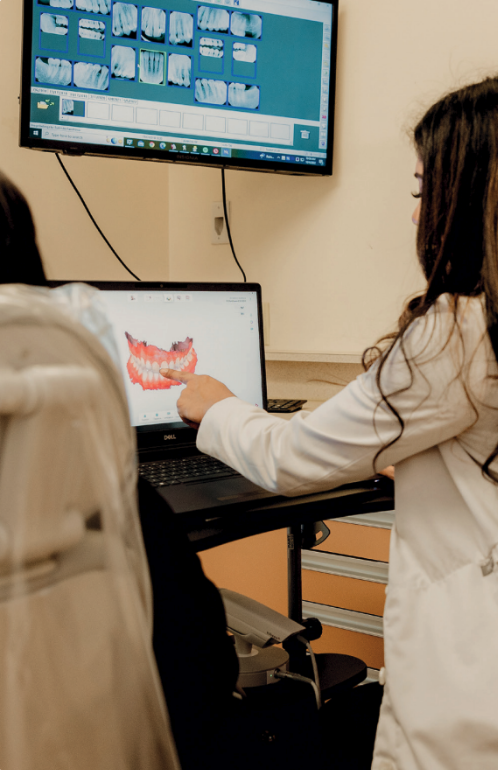
One of the strongest themes in Dr. Spaulding’s marketing approach is the role of visual education in building trust. Patients are far more likely to move forward when they understand what the doctor sees.
Instead of relying on explanation alone, she uses visuals to bring patients into the treatment planning process. Scans, photos, and diagnostic imagery help patients understand conditions in a way that feels concrete rather than abstract.
This is especially important in dentistry because cost objections are the most common reason patients don’t move forward with treatment. While better visual communication does not eliminate those objections, it can paint a clearer picture of what they’re paying for and what the outcome will be.
I involve them so heavily in the treatment planning process that ultimately the patient is the one driving it.
LET CONTENT BUILD FAMILIARITY BEFORE THE FIRST VISIT
For private practices, trust often starts before a patient ever walks through the door. That is why content can play such an outsized role in growth.
Dr. Spaulding’s view is direct: If you are the face of a private practice, patients should have an opportunity to get to know you. That does not mean performing dances on TikTok or chasing Instagram trends. It means showing up clearly, consistently, helpfully, and professionally.
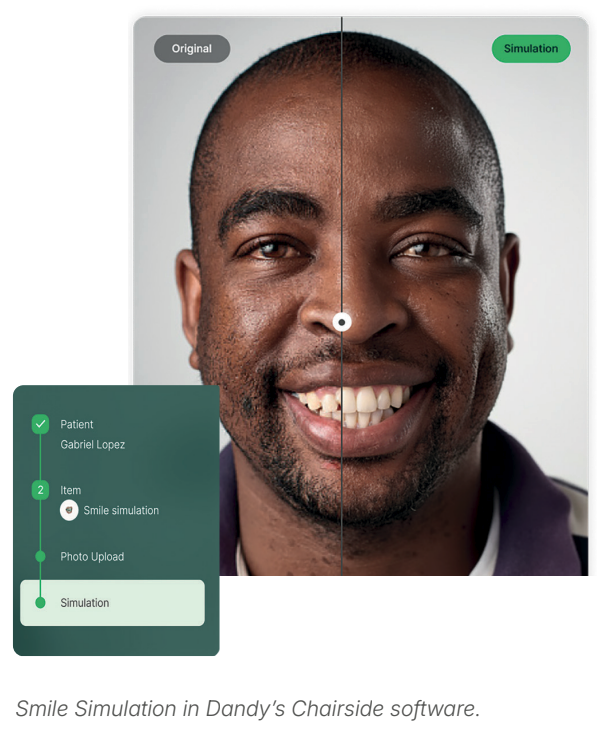
Educational videos, short explanations, and simple walkthroughs can sort of “pull back the curtain” for patients. Consider this—most patients go to the dentist twice per year for a cleaning, possibly a bit more often every couple years for a crown or filling. Their knowledge of what really goes on at your practice is limited both because of a lack of exposure and because of a lack of clinical and technical knowledge.
Through building a social media presence, dentists are able to address both of those areas and help patients feel more comfortable and familiar with the experience.
In Dr. Spaulding’s case, content that addressed patient anxiety and everyday care questions helped attract exactly the kinds of patients who were looking for a more supportive experience.
START WITH WHAT YOU ALREADY SAY EVERY DAY
One reason many dentists hesitate to create content is that they assume they need a completely new skill set. Dr. Spaulding offers a more practical starting point: Begin with the explanations you already give every day.
Every practice has recurring conversations. Explaining a cracked tooth, walking through periodontal disease, talking about aligners, addressing patient anxiety, etc. Those moments already contain the language and topics that patients are curious about.
When practice owners turn those everyday explanations into articles, videos, captions, or short educational features, content becomes far more sustainable. It also becomes more authentic. Instead of sounding like marketing, it sounds like the doctor patients will actually meet.
GROWTH COMES FROM CONTINUOUS EXPERIMENTATION
What makes this story especially compelling isn’t that Dr. Spaulding figured out the perfect equation for social media success right away—it’s that she approaches the task with a scientist’s mindset. That is, she’s always experimenting.
Dr. Spaulding describes the practice as a laboratory: a place to test, refine, improve, and keep moving toward a clearer vision. Some changes were operational.
Some were patient-facing. Some were marketing-related. But the throughline was the same: Identify friction, improve the system, and keep going.
That mindset can be especially valuable for SMB owners. Growth does not require doing everything at once or even getting it right the first time. It requires noticing where the experience breaks down, where communication can improve, and where a small change could make the practice feel more modern, more trusted, or more memorable.
For practices looking to grow, the most useful question may not be, “What should we market next?” It may be, “What can we make clearer, easier, or more valuable for patients right now?”
A MORE MODERN WAY TO STAND OUT
In a crowded market, patients are not just comparing clinical services. They are comparing experiences. They are noticing whether a practice feels current, whether communication feels clear, and whether the team seems invested in making care easier.
That is why the strongest growth strategies often live at the intersection of operations, technology, and patient experience. Better systems support better care. Better visuals support better conversations. Better content supports earlier trust. Together, those things become marketing.
For owners building the next version of their practice, Dr. Spaulding’s example is a helpful one: Start with the experience you want patients to have, use the tools that make that experience easier to deliver, and keep refining from there.
Because in modern dentistry, some of the best marketing does not look like marketing at all. It looks like a practice that works the way patients hoped it would.
5 patient questions worth turning into content
THE EASIEST WAY TO START CREATING ONLINE CONTENT IS WITH
THE QUESTIONS YOUR TEAM ALREADY HEARS EVERY DAY.
→ Why do I need treatment if nothing hurts yet?
→ What does this treatment actually do?
→ What is the difference between my options?
→ What can I expect during a visit?
→ How do I take better care of this at home?
QUICK TIP
Ask your team one simple question:
→ What do patients ask us about most often? Start there.